U.S. Hospital Bed Market Overview
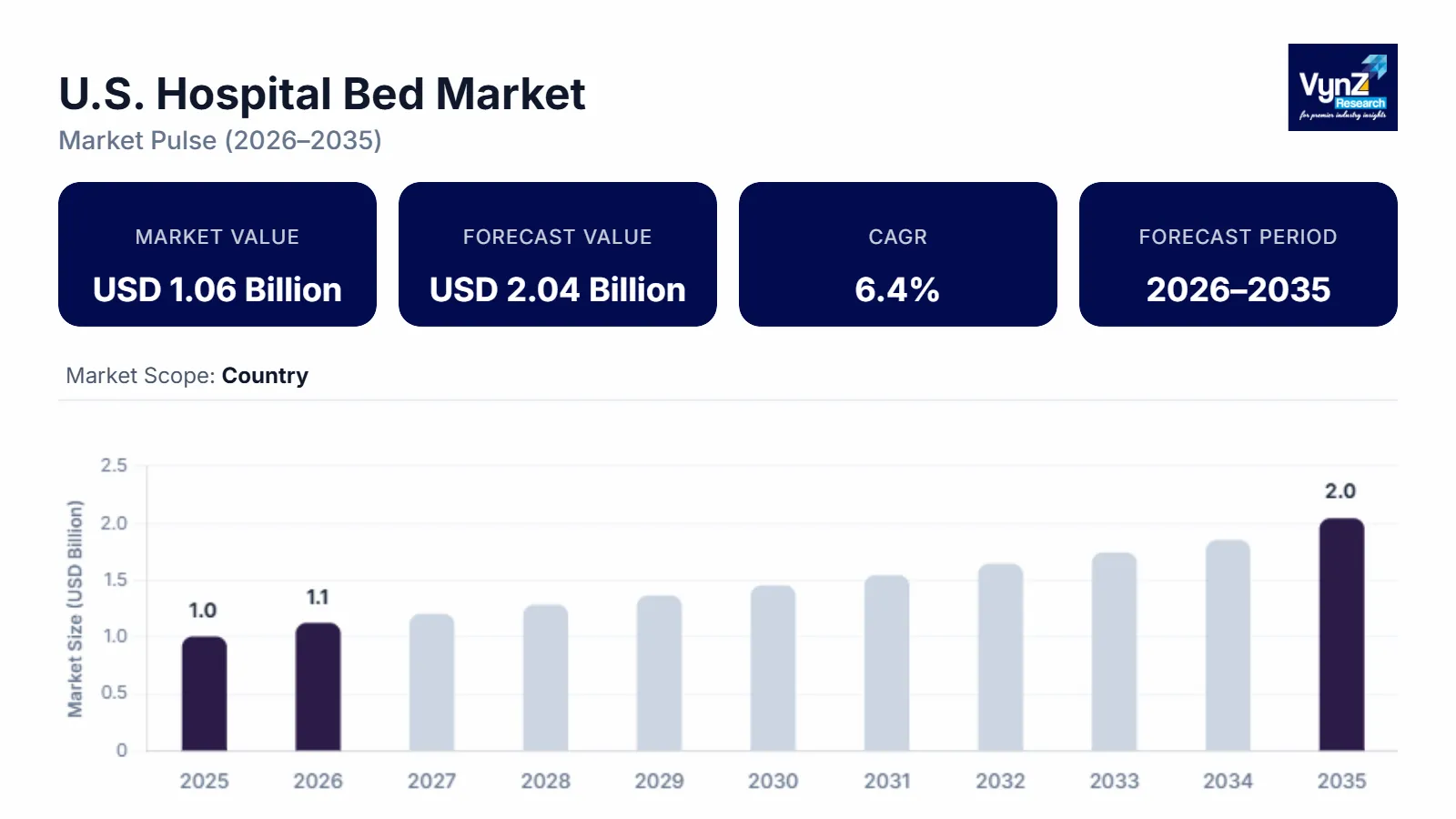
The U.S. hospital bed market size was estimated at approximately USD 1.06 billion in 2025 and is expected to reach around USD 1.12 billion in 2026, rising to nearly USD 2.04 billion by 2035, growing at an estimated 6.4% CAGR during 2026 to 2035.
Research Highlights
- Electric hospital beds held 46.8% share in 2025 due to smart healthcare adoption.
- Acute care captured 41.9% share in 2025 supported by hospital admissions.
- Hospitals generated 58.6% revenue in 2025 owing to infrastructure expansion.
- Specialty hospital beds are projected at 7.3% CAGR during 2026 to 2035 driven by critical care.
- California represented 19.4% market share in 2025 supported by healthcare investment.
Market growth is primarily fueled by growing healthcare infrastructure development, an increase in the prevalence of chronic illnesses, and a rise in the adoption of technologically advanced patient care solutions. The upsurge in the adoption of electric hospital beds and connected systems in the healthcare industry is also projected to propel the market growth. Moreover, with the growing number of patients and the aging population, the demand for hospital beds, especially in California, Texas, Florida, New York, and other states, is expected to grow at a significant pace. The United States Department of Health and Human Services (HHS), the Centers for Medicare & Medicaid Services (CMS), and the Food and Drug Administration (FDA) have been playing a critical role in fueling the growth of the industry through various programs. Besides, the federal healthcare programs are promoting and supporting the enhancement of patient safety and hospital inpatient capacity nationwide. In addition, soaring occupancy rates are encouraging healthcare providers to invest in hospital beds.
U.S. Hospital Bed Market Dynamics
Market Trends
Electric hospital beds with advanced patient monitoring and pressure management features are in demand in the U.S. Hospital Bed Market. This is due partly to a general healthcare preference for improved patient safety, efficiency, and caregiver support. Hospitals are also replacing standard beds and upgrading to connected systems that allow for greater real-time patient monitoring and optimization of care. In addition, home healthcare and long-term care are growing trends, which have an impact on the medical equipment industry. The increased prevalence of aging populations and chronic diseases, as well as technological advances, are driving manufacturers to create more lightweight, remote patient monitoring, ergonomic, and automated solutions that prioritize comfort and clinical results.
Growth Drivers
The market is primarily driven by increased healthcare spending and the growing number of hospitalizations for chronic illnesses, aging populations, and surgeries, all of which contribute to continued hospital admissions in acute care, rehabilitation, and long-term care facilities. In addition, the expansion of healthcare infrastructure and the emphasis on patient safety technologies are critical factors fueling the market growth. In addition to the existing demand for hospital beds in acute care hospitals, there is also a growing need for beds in home healthcare and long-term care for aging populations. The adoption of electric hospital beds, as well as the investment in home healthcare and a focus on positive patient outcomes, will propel the market growth and development throughout the forecast period.
Market Restraints / Challenges
The market has a considerable number of restraints and challenges that could impede its growth. First, the market’s primary restrictions are the high purchase prices of hospital beds and the rising expenditures in terms of maintenance and operations, especially for less competitive hospitals and medical facilities. In addition, medical institutions must carefully balance their expenditures since hospital infrastructure, like beds, typically requires a large initial investment. The current disruptions in the supply chain and the increasing complexity of components and technology in medical equipment may impede the growth of the hospital beds market. The fluctuating prices of components and the need for specific expertise and technology in manufacturing hospital beds present additional challenges to manufacturers.
Market Opportunities
The current and future growing emphasis on smart hospital infrastructure and connected medical devices presents an intriguing opportunity for market players in the market. The growing trend in artificial intelligence-enabled patient monitoring and automated mobility technologies is likely to gain traction, with organizations developing intelligent hospital beds with remote monitoring capabilities leading the pack. In addition, the growing emphasis on home healthcare equipment, bariatric beds, and critical care solutions presents a fantastic opportunity for organizations looking to build long-term care equipment. The transition to innovative digital healthcare solutions and the increased need for patient-centered care in hospitals, long-term care facilities, and home healthcare settings will drive the market growth in the coming years.
U.S. Hospital Bed Market Report Coverage
|
Report Metric
|
Details
|
|
Historical Period
|
2020 - 2024
|
|
Base Year Considered
|
2025
|
|
Forecast Period
|
2026 - 2035
|
|
Market Size in 2025
|
U.S.D. 1.06 Billion
|
|
Revenue Forecast in 2035
|
U.S.D. 2.04 Billion
|
|
Growth Rate
|
6.4%
|
|
Segments Covered in the Report
|
Product Type, Application, End User
|
|
Report Scope
|
Market Trends, Drivers, and Restraints; Revenue Estimation and Forecast; Segmentation Analysis; Companies’ Strategic Developments; Market Share Analysis of Key Players; Company Profiling
|
|
Regions Covered in the Report
|
California, Texas, Florida, Rest of the U.S.
|
U.S. Hospital Bed Market Segmentation
By Product Type
Electric hospital beds led the market with a share of around 46.8% in 2025. The adoption of electric hospital beds is rising in acute care hospitals, intensive care units, and rehabilitation centers. The beds provide comfort to the patients and ease the caregivers’ work, which supports market growth. The rising need for digital patient monitoring and pressure management systems is projected to drive the segment growth during the forecast period.
Specialty hospital beds are the fastest growing segment and are projected to grow at a CAGR of 7.3% during 2026 to 2035. This segment is growing due to the increasing need for bariatric beds, long-term acute care, pressure injury prevention, and specialized patient care solutions. The continuous development of therapeutic beds and patient support systems is also contributing to the growth of this segment.
By Application
Acute care beds accounted for the largest share of the market, with a value of 41.9% in 2025. The segment is growing due to the rising number of hospital admissions, increasing number of surgeries, and development of multispecialty hospitals. The growth of this segment is supported by the expansion of emergency care services and improvements in healthcare infrastructure.
Home healthcare beds are expected to grow at the fastest rate, with a projected CAGR of 7.1% during 2026 to 2035. The segment growth is supported by an aging population and the rising need for home healthcare services and equipment.
By End User
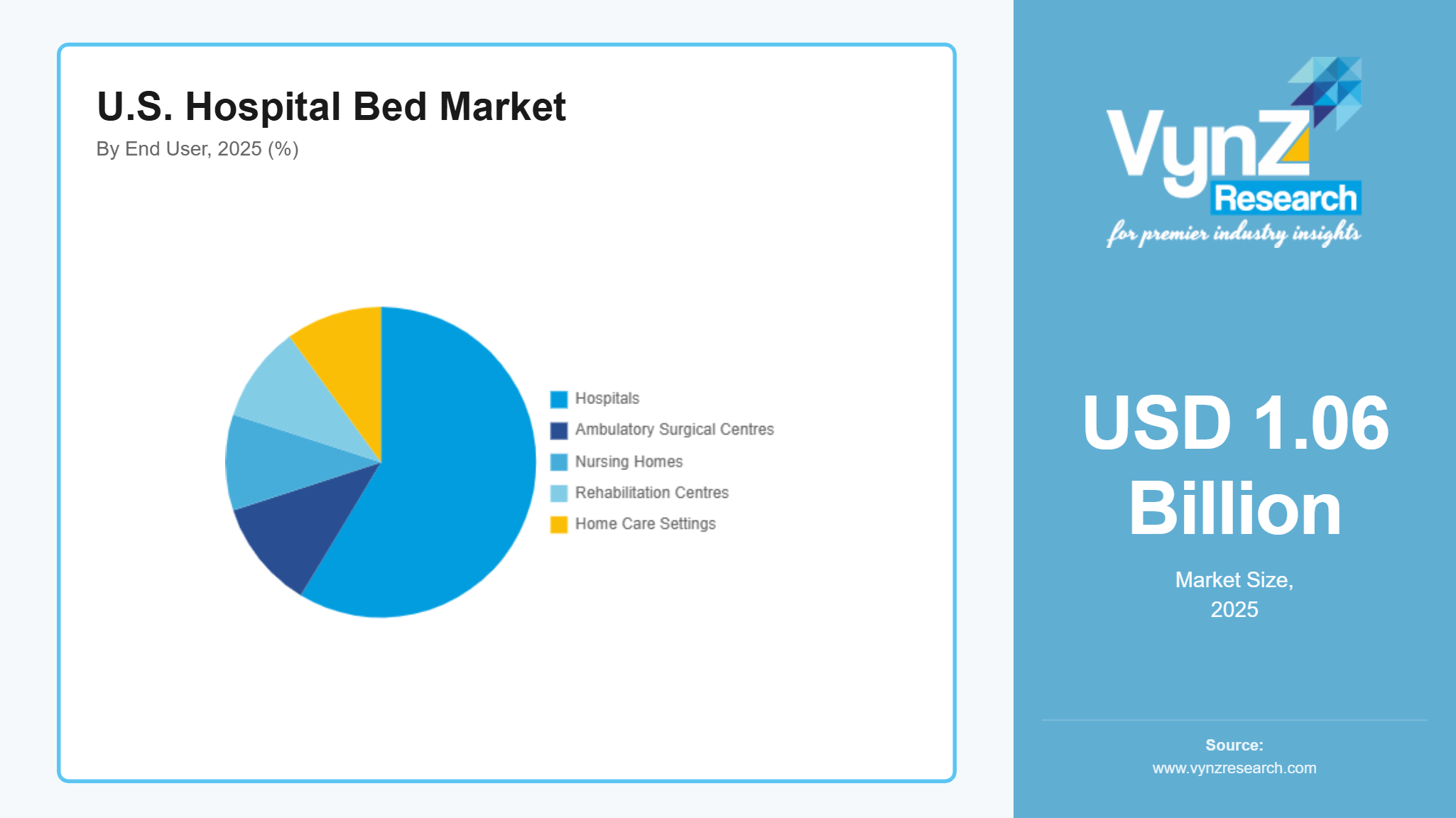
Hospitals accounted for the largest share of the market, with a revenue of 58.6% in 2025. This segment is growing due to the increasing number of patients, expansion of healthcare infrastructure, and rising procurement of technologically advanced patient care equipment by hospitals. The continuous development of digital healthcare systems and patient safety programs supports the demand for hospital beds in hospitals.
Home care settings are the fastest growing segment and are projected to grow at a CAGR of 6.9% during 2026 to 2035. This segment growth is driven by the growing need for chronic disease management, elderly patient care, and cost-effective treatment options.
Regional Insights
California
California contributed around 19.4% to the U.S. Hospital Bed Market in 2025. The state has a developed hospital bed network and increased healthcare expenditure. The demand for patient care equipment in Los Angeles, San Diego, San Francisco, and Sacramento, California, is growing due to the rising need for advanced patient care. Furthermore, California’s hospital infrastructure development, specialty hospital networks’ expansion, and adoption of smart hospital beds are projected to propel the market growth in the coming years.
Texas
Texas contributed around 17.8% to the market in 2025. The state is experiencing extreme population growth and is witnessing exponential developments in its healthcare sector. Moreover, the expansion of hospital networks and investments in multi-specialty medical institutions in Houston, Dallas, Austin, San Antonio, and other regional hubs are supporting the need for hospital beds in the state. The rise in hospital admissions, an increase in the number of surgeries performed, and the development of private medical infrastructure are some of the major factors influencing the market growth in Texas. Texas Health and Human Services Commission (HHSC) and the U.S. Department of Health and Human Services (HHS) are fostering the development of healthcare infrastructure and the enhancement of care quality.
Florida
Florida contributed around 14.6% to the market in 2025. The state is experiencing an aging population and a rise in healthcare expenditure. The development of hospital networks and rehabilitation centers throughout Miami, Orlando, Tampa, Jacksonville, and other famous cities is also augmenting the demand for hospital beds in the state. Furthermore, the state’s emphasis on long-term care and disease management is also supporting the requirement for electric and specialty beds in hospitals. Florida Agency for Health Care Administration (AHCA) and the Centers for Medicare & Medicaid Services (CMS) have been focusing on improving healthcare quality in the state.
Rest of the U.S.
Rest of the U.S. contributed around 48.2% to the market in 2025. New York, Illinois, Pennsylvania, Ohio, North Carolina, Georgia, Arizona, Washington, Massachusetts, Michigan, and other states are included in this segment. Investments in the development of hospital infrastructure, rising healthcare expenditure, the expansion of long-term care facilities, and upgrades to patient care equipment are factors influencing the market growth in this region. The programs led by the Centers for Medicare & Medicaid Services (CMS), the U.S. Department of Health and Human Services (HSS), and the Food and Drug Administration (FDA) are promoting the growth of the healthcare sector, enhancing patient care quality, and adopting modern technologies and equipment in the hospitals.
Competitive Landscape / Company Insights
The market is moderately to highly competitive. Key players operate at the international and regional levels, focusing on smart patient care technologies, innovation, healthcare partnerships, and production development. Producers offer electric hospital beds, patient monitoring systems, ergonomic solutions, and digital healthcare technologies to meet the growing demand and strengthen their competitive positions. Healthcare initiatives by the CMS, FDA, and HHS promote the development of the hospital bed market in the United States.
Mini Profiles
Baxter International Inc. focuses on connected patient care solutions, hospital equipment, and smart healthcare technologies, supported by extensive clinical expertise and global healthcare operations.
Drive DeVilbiss Healthcare specializes in medical beds, mobility equipment, and home healthcare solutions, supported by a broad distribution network and diversified healthcare portfolio.
GF Health Products, Inc. develops patient care equipment, long term care beds, and clinical furniture, supported by strong manufacturing capabilities and healthcare partnerships.
Getinge AB provides advanced critical care and hospital infrastructure solutions, emphasizing patient safety, digital healthcare integration, and clinical workflow efficiency.
Invacare Corporation focuses on home healthcare beds, rehabilitation equipment, and long-term patient care solutions, supported by innovation and established healthcare distribution channels.
Key Players
- Baxter International Inc.
- Drive DeVilbiss Healthcare
- GF Health Products, Inc.
- Getinge AB
- Hill-Rom Holdings, Inc. (Baxter)
- Invacare Corporation
- LINET Group SE
- Medline Industries, LP
- Stryker Corporation
- Paramount Bed Holdings Co., Ltd.
Recent Developments
In January 2026, LINET Group SE introduced next generation smart hospital beds featuring enhanced patient monitoring and caregiver assistance technologies. The launch strengthened its acute care and intensive care product portfolio.
In March 2026, Medline Industries, LP expanded its medical equipment distribution network to support growing demand from hospitals and long-term care facilities. The investment improved nationwide healthcare supply capabilities.
In February 2025, Paramount Bed Holdings Co., Ltd. expanded production capacity for advanced electric hospital beds to meet increasing global healthcare demand. The initiative also strengthened product availability across healthcare institutions.
In April 2025, Stryker Corporation introduced enhanced hospital bed technologies designed to improve patient mobility, pressure injury prevention, and caregiver efficiency. The development supported continued innovation in acute care solutions.
In May 2025, Hill-Rom Holdings, Inc. (Baxter) expanded its connected care portfolio through advanced digital patient monitoring technologies integrated with smart hospital beds. The initiative strengthened clinical workflow and patient safety capabilities.