
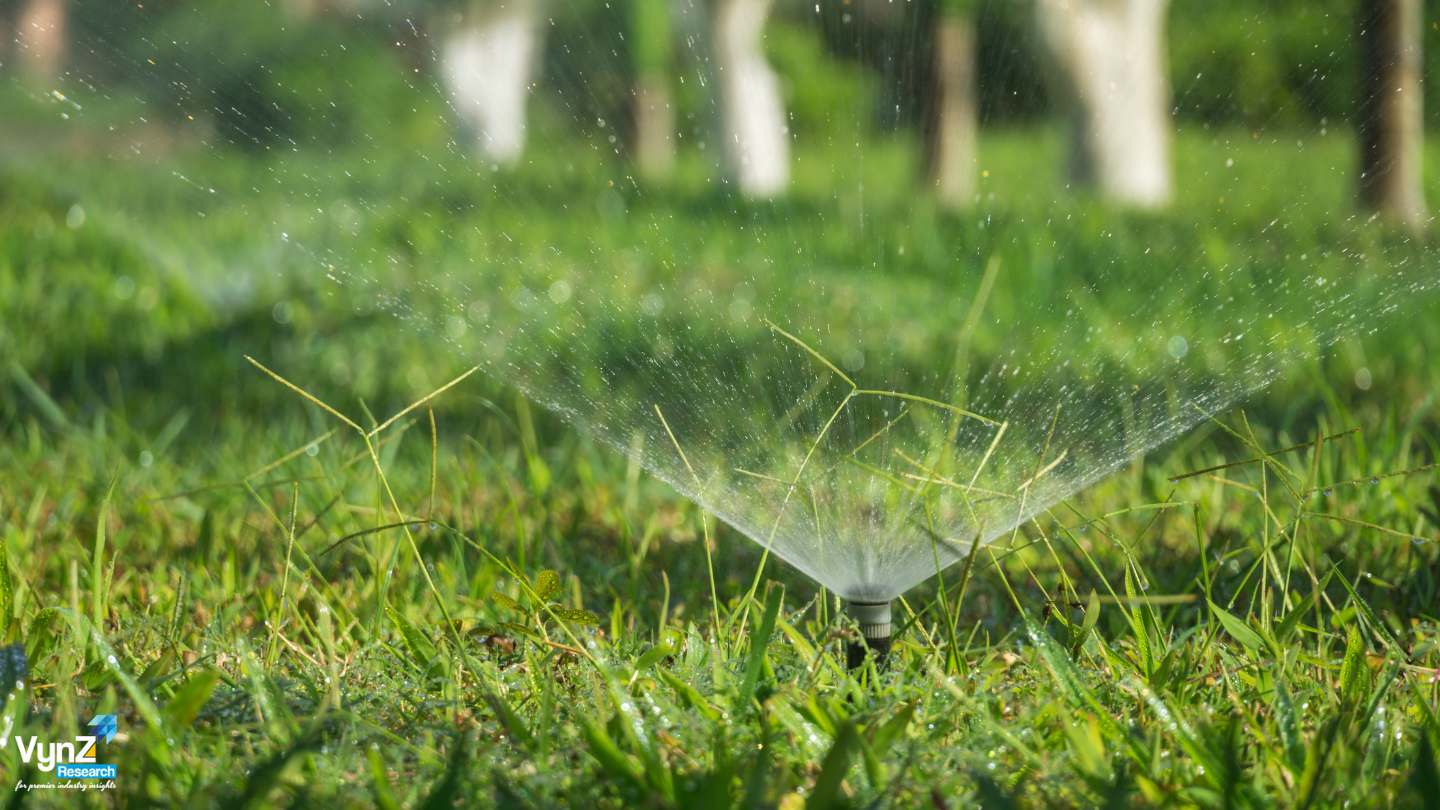
If you look at a satellite map of rural Asia today, the landscape is physically changing. Those massive, shimmering flooded plains used for centuries are being replaced by a more surgical kind of green. As of late April 2026, the Asia Pacific drip irrigation market isn't just growing; it's undergoing a total structural reboot. With the market expected to hit $4.4 billion this year, it has reached a point where precision watering has moved from a high-end luxury to a basic survival tool for the modern farmer.
The real shift isn't just about saving a few litres of water. It’s about a new reality where the farm is treated more like a factory, and the water is a precision-managed input.
Blending Irrigation and Technology
This season has seen the most intense discussions about a new development which combines irrigation expertise with technology companies. Netafim and Amazon India expanded their partnership earlier this quarter to deliver digital drip systems to more than 100 independent farms.
This isn't just a pilot; it’s a blueprint for how e-commerce and ag-tech are merging. By turning water usage into a measurable stewardship metric, they are saving hundreds of millions of litres while proving that even smallholder farmers can access world-class automation if the logistics are handled right.
The Move to Agentic Irrigation
The big news at the agricultural trade shows this month wasn't better pipes; it was better brains. It is seeing the rise of automation and digital control systems, which are currently the fastest-growing segment of the market. It has moved past the simple timer. Today’s systems use real-time soil sensors and satellite data to decide when to pulse water.
In countries like Australia and China, these systems are effectively acting as digital foremen, making micro-adjustments to the flow without a human ever needing to walk the field.
Subsurface Drip: The Invisible Revolution
While surface tubes are common, the smart money" this April is going underground. Subsurface drip irrigation (SDI) is seeing a massive surge in interest because it eliminates surface evaporation entirely. For farmers in heat-stressed regions of South Asia, burying the lines 6 to 10 inches deep does more than just save water, it prevents weed growth and stops the sun from baking the plastic components. It’s a set-it-and-forget-it approach that is finally becoming affordable for row crops like cotton and sugarcane, not just high-value orchards.
The End of the Clog Era
Anyone who has run a drip system knows the biggest nightmare is a clogged emitter. There is a major technical breakthrough in anti-clogging hardware. New designs like the TurbuNext technology are using what’s called a labyrinth design to physically shake debris out of the dripper. It sounds like a small detail, but in regions where water is often heavy with sediment or minerals, this tech is what makes the difference between a system that lasts one season and one that lasts ten.
KPIs Over Handouts Policy
Governments across the Asia Pacific are also changing their tune. In the past, you might get a subsidy just for buying a pump. Linking performance and incentives is a new idea in 2026. Programs like India’s PM E-DRIVE and Japan's smart-water initiatives are now tying financial support to measurable KPIs like yield-per-drop. This is forcing manufacturers to stop selling cheap, low-grade kits and start delivering high-performance systems that can actually prove they are making the farm more profitable.
The New Landscape of Productivity
At the conclusion of the 2026 harvest season the results obtained by farmers who use flood irrigation and those who practice drip irrigation will become evident to everyone. The development of agricultural efficiency through new methods of food production leads to a complete transformation of traditional farm design. The goal now is to turn irrigation into a controllable, measurable production loop that removes the guesswork from the harvest. In a region where water is becoming the most valuable currency on earth, those who can manage every drop are the ones who will own the future of food.