
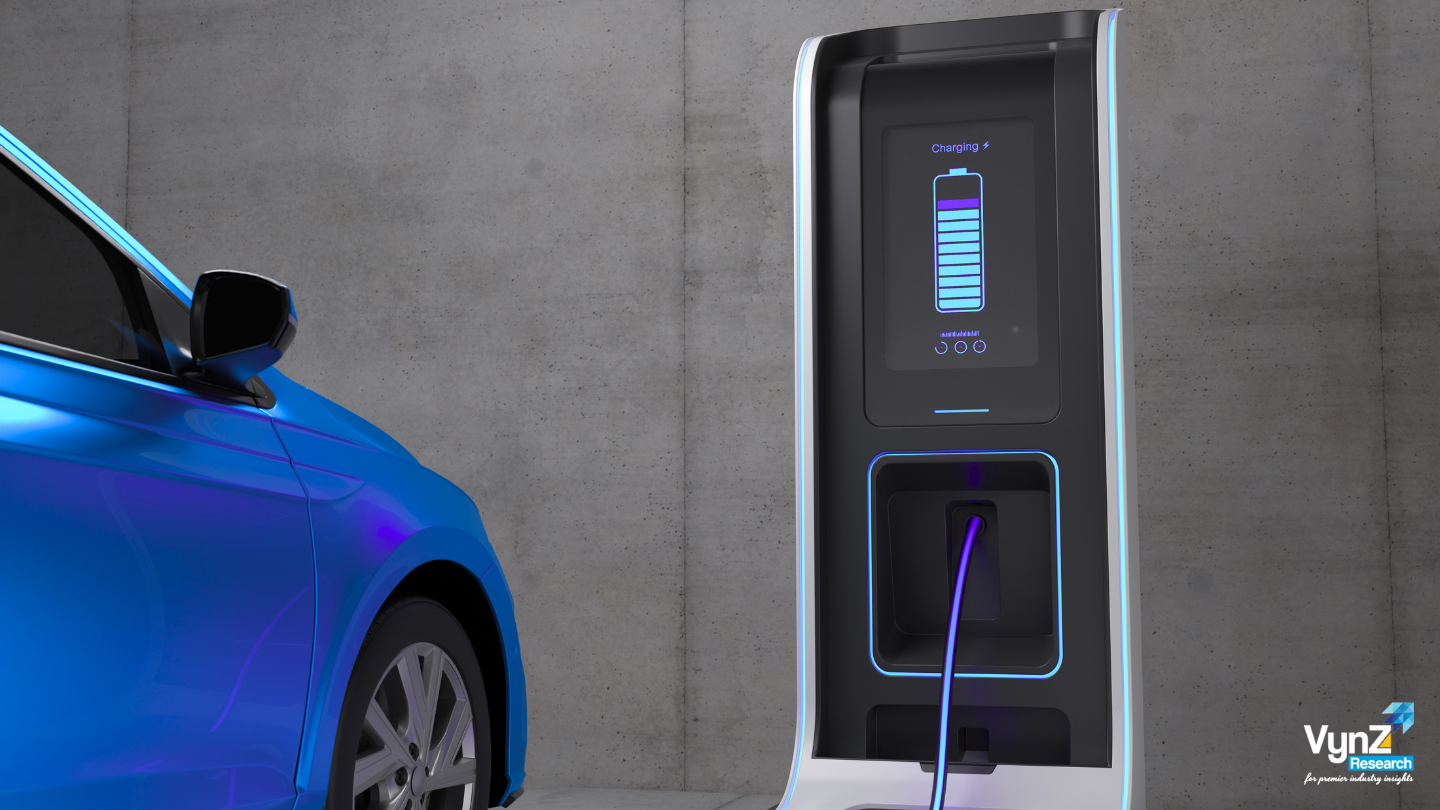
The race to power Light Electric Vehicles (LEVs) has fundamentally shifted in Asia pacific region. It has officially moved past the early adopter phase where finding a place to juice up felt like a scavenger hunt. As of late April 2026, the Asia Pacific LEV charging station market isn't just growing; it’s being completely re-engineered. With the market projected to surge by over 20% this year alone, it indicates the birth of a new kind of energy internet.
The real story isn't just more plugs. It’s about how charging is becoming faster, smarter, and, for the first time, integrated directly into the power grid.
The Rise of the Smart Hub: 17 New Freight Corridors
The big news hitting the wires this year is the massive expansion of high-capacity charging hubs in Western India. Amp Volts just announced a partnership to deploy 17 dedicated charging hubs along major industrial corridors. While these are designed for light and heavy freight, they serve as a blueprint for the region: moving charging away from cluttered city centers and onto the highways. By creating these energy pit stops, the industry is finally solving the range anxiety that has kept electric logistics from going truly long-haul.
V2G: Your Scooter as a Battery for the City
One of the most technical but vital shifts this year is the rollout of vehicle-to-grid (V2G) capabilities. In China, the National Development and Reform Commission (NDRC) has just embedded 30 pilot programs across nine cities. This turns your parked electric two-wheeler into a mini power plant. When the city’s grid is under stress, the charging station can actually borrow a little power back from the vehicles. It’s a massive step toward making charging stations a baseline part of national infrastructure rather than just a drain on the local transformer.
The Sixty-Second Swap: Automated and Human-Free
While traditional charging is getting faster, Battery Swapping is still the king of convenience for Asia’s millions of two-wheelers. As of April 2026, automated swapping has taken over nearly 65% of the market. It has moved away from the old, manual lockers. Today’s stations use robotics and AI to swap a battery in under a minute without a human ever touching a cable. Industry leaders like Gogoro have turned these stations into go-stations or digital hubs that talk to your phone and reserve a battery for you before you even arrive.
The Pay-Per-Use Financial Shift
The way you pay for energy has also undergone a silent revolution. More than half of the market has now shifted to a pay-per-use or subscription model. Instead of buying an expensive charger for your home, commuters are opting for charging-as-a-service. This has lowered the barrier to entry for millions of middle-class families. For the price of a monthly data plan, you get unlimited access to a network of city-wide chargers, making the fuel for an LEV predictable and cheap.
Policy Beyond the Subsidy: The 2026 Mandate
The government’s role has changed from cheerleader to enforcer. In South Korea and Japan, new urban development laws are now requiring charging readiness for all new residential builds. It’s no longer about giving out a few dollars to install a charger; it’s about making charging stations a non-negotiable part of urban planning. This de-risking of the infrastructure is what’s allowing private capital to pour into the sector, with over $24 billion already flowing into the region's charging networks this year.
It is about Connected Energy
The gap between a scooter with a battery and a connected energy asset is now officially closed. By the end of 2026, the idea of searching for a charging station will feel as outdated as looking for a phone booth. As these stations become smarter and more automated, the fueling process is becoming invisible and just a quick visit at a swap station or a smart-plug session while you shop. It is finally building a grid that’s as fast and flexible as the vehicles it’s designed to power, making the green transition feel like a genuine upgrade rather than a compromise.