U.S. Protein Expression Market Overview
The U.S. protein expression market size was estimated at approximately USD 1.44 billion in 2025 and is expected to reach around USD 1.54 billion in 2026, rising to nearly USD 3.14 billion by 2035, growing at an estimated 8.1% CAGR during 2026 to 2035.
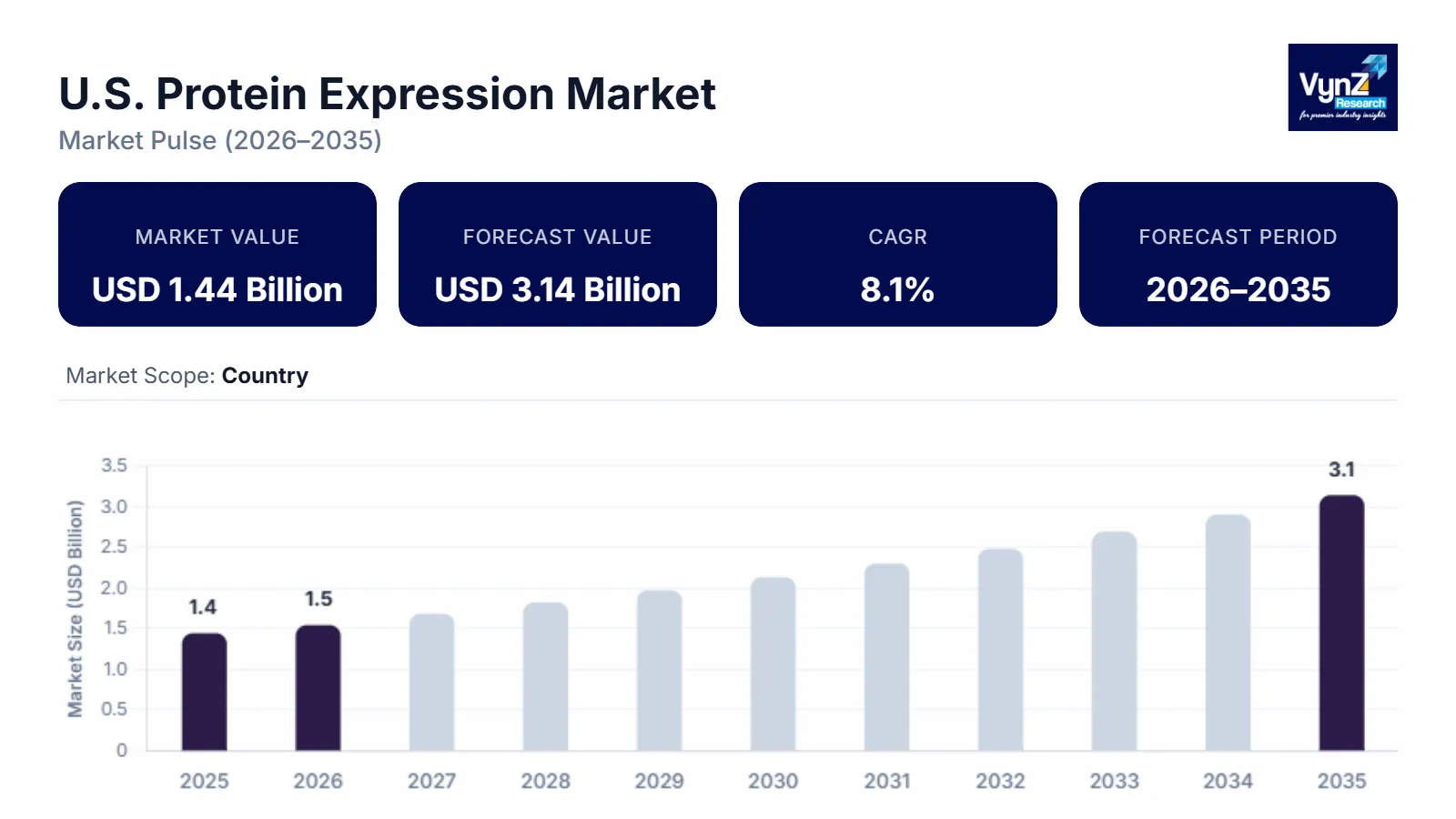
Research Highlights
- Mammalian systems held 42.8% share in 2025 fueled by biologics production.
- Reagents captured 36.7% share in 2025 supported by recurring laboratory demand.
- Pharmaceutical companies generated 51.4% revenue in 2025 owing to biologics pipelines.
- Cell free expression systems are projected at 9.1% CAGR during 2026 to 2035 driven by synthetic biology.
- Massachusetts represented 18.3% market share in 2025 supported by biotechnology research.
Market growth is propelled by the expansion of biologics development, increased investments in life sciences research, and a growing need for recombinant protein technologies, as well as the rising demand for monoclonal antibodies and precision medicine. The surge in research activities conducted by pharmaceutical and biotechnology companies, as well as academic institutions and supported by NIH, FDA, NIGMS, and other government agencies, is projected to fuel the market growth in biotechnology hubs across the country, including Massachusetts, California, Maryland, and North Carolina, among others. Federal investment in biomedical research and biotechnology innovations is expected to accelerate the development and adoption of next-generation protein expression technologies.
U.S. Protein Expression Market Dynamics
Market Trends
The U.S. protein expression market is witnessing a positive change in terms of recombinant protein production technologies, cell engineering, and bioprocess optimization. One of the key market trends is the growing preference for mammalian expression systems for manufacturing complex protein biotherapeutics, monoclonal antibodies, vaccines, and other recombinant proteins. Moreover, industry participants are witnessing the demand for high-yield protein expression, innovative approaches to cell engineering, and optimization of downstream processing to meet the rising need for biopharmaceuticals. Another key trend is the rising R&D investment into synthetic biology, cell-free protein expression platforms and technologies, AI-driven design and engineering of protein therapeutics, and automation to enable greater scalability and throughput in biologics manufacturing.
Growth Drivers
The market has witnessed tremendous growth in recent years due to an increased emphasis on biopharmaceuticals research and development across the U.S. biotech industry, which is projected to continue growing at a healthy CAGR throughout the forecast period. A rise in biopharmaceutical development, increased prevalence of chronic diseases, a surge in clinical research, and a growing demand for recombinant protein therapeutics are some of the key factors driving the market growth. In addition, the adoption of precision medicine, growing investment in vaccine research, and increased emphasis on biotechnology manufacturing are other critical factors anticipated to propel the market upward during the forecast period.
Market Restraints / Challenges
One of the primary restraints of the market is the increasing production cost associated with complex biologics manufacturing, advanced recombinant protein production technologies, and lengthy product development cycles that limit the profitability of biotech firms. Apart from that, the requirement for greater product consistency and yield along with compliance with FDA regulations also presents a considerable challenge to biotechnology companies. In addition, the complex manufacturing process, stringent regulatory guidelines, and rising demand for highly skilled professionals contribute to the augmented operating and production costs of biologics manufacturing facilities.
Market Opportunities
The market provides substantial growth opportunities concerning cell therapy, gene therapy, and biologics manufacturing. With rising investment in recombinant DNA technology, cell-free protein expression platforms, and AI-driven protein engineering across the U.S biotechnology sector, organizations developing innovative cell engineering platforms and technologies for high-yield protein production are likely to witness heightened demand for their products and services. Moreover, the growing need for contract research, contract manufacturing, and personalized medicine is also supporting the demand for biologics manufacturing technologies and facilitating long-term growth for biotechnology firms offering advanced recombinant protein production platforms.
U.S. Protein Expression Market Report Coverage
|
Report Metric
|
Details
|
|
Historical Period
|
2020 - 2024
|
|
Base Year Considered
|
2025
|
|
Forecast Period
|
2026 - 2035
|
|
Market Size in 2025
|
U.S.D. 1.44 Billion
|
|
Revenue Forecast in 2035
|
U.S.D. 3.14 Billion
|
|
Growth Rate
|
8.1%
|
|
Segments Covered in the Report
|
Expression System, Product, Application, End Use
|
|
Report Scope
|
Market Trends, Drivers, and Restraints; Revenue Estimation and Forecast; Segmentation Analysis; Companies’ Strategic Developments; Market Share Analysis of Key Players; Company Profiling
|
|
Regions Covered in the Report
|
Massachusetts, California, Maryland, Rest of the U.S.
|
U.S. Protein Expression Market Segmentation
By Expression System
Mammalian expression systems accounted for the largest revenue share of approximately 42.8% in 2025. This segment is primarily driven by the ability of these systems to produce complex therapeutic proteins with accurate post translational modifications and high biological activity.
Cell free expression systems are projected to witness the highest growth rate of approximately 9.1% during 2026 to 2035. These systems offer rapid protein synthesis, reduced workload, and are becoming more widely adopted for drug discovery and synthetic biology research.
By Product
Reagents accounted for the largest revenue share of approximately 36.7% in 2025. These are used extensively in research laboratories, biopharmaceutical manufacturing facilities, and academic institutes. Upcoming developments in molecular biology as well as increased investment in biologics research and development will fuel demand for reagents and related consumables.
Services are projected to grow at the fastest rate during 2026 to 2035 with a CAGR of 8.8%. Contractual research and production of proteins, peptides, and other biotherapeutics are gaining traction in the U.S. biotechnology industry.
By Application
Therapeutic protein production contributed the largest revenue share of approximately 39.6% in 2025. Increasing investment in biologics, biosimilars, monoclonal antibody therapeutics, and recombinant vaccines has been driving this segment.
Drug discovery is projected to grow at the highest rate of approximately 8.5% during 2026 to 2035. Increasing investment in precision medicine and related research along with high throughput screening technologies is fueling this segment.
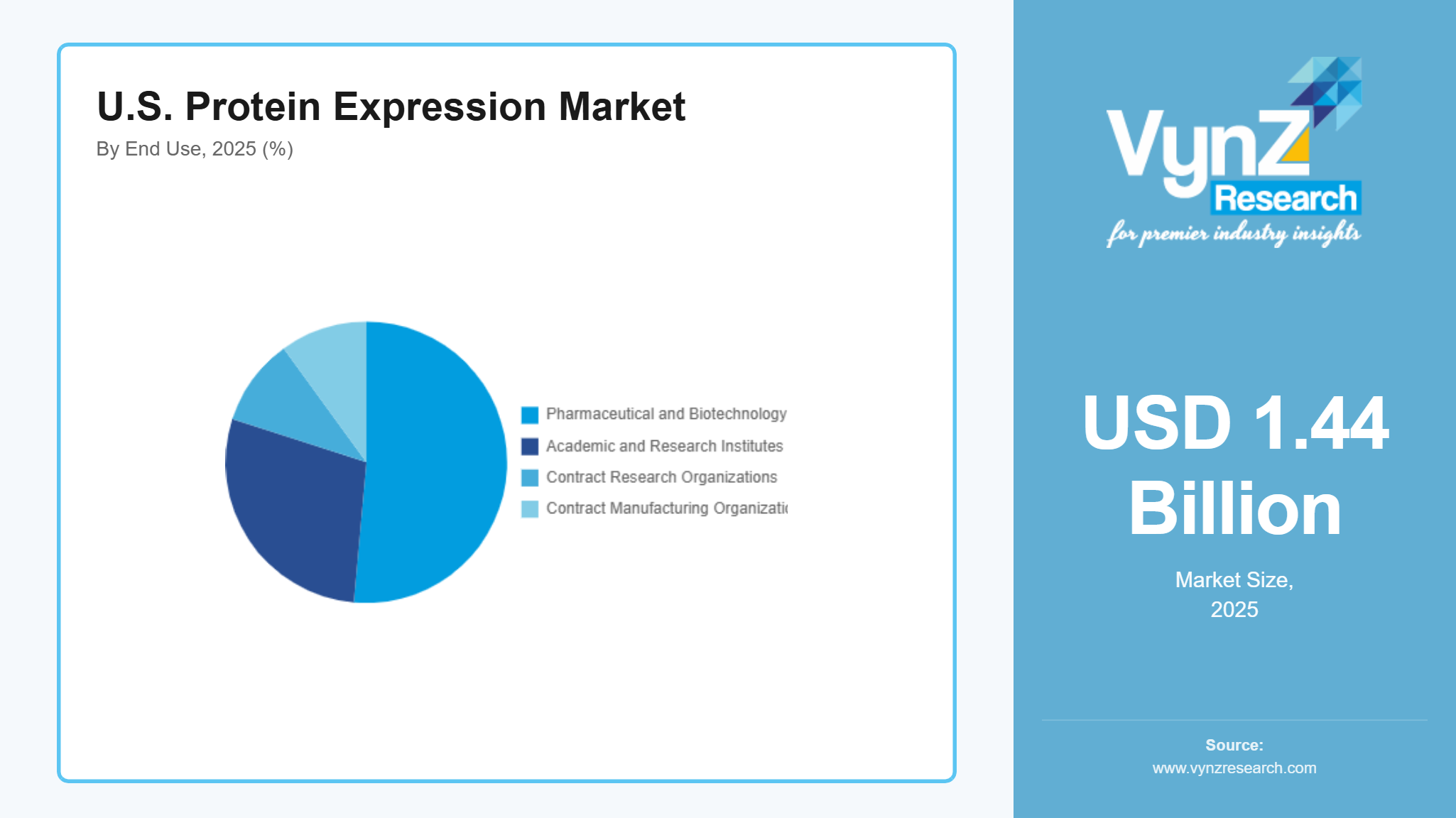
By End Use
Pharmaceutical and biotechnology companies held the largest revenue share of approximately 51.4% in 2025. These companies are investing heavily in biologics development and expanding their research and development capabilities. High demand for therapeutic proteins in the U.S. pharmaceutical market is supporting this segment.
Contract research organizations are projected to witness a growth of approximately 8.3% during 2026 to 2035. Outsourcing of protein expression studies, pre-clinical research, and biologics development is rising in the U.S. biotechnology industry.
Regional Insights
Massachusetts
Massachusetts contributed to about 18.3% of the U.S. protein expression market in 2025. The state has a robust biotechnology sector with leading-edge research institutes and an extensive network of biopharmaceutical companies across Boston, Cambridge, and Worchester. It has experienced a significant rise in the number of research facilities focused on recombinant protein research, biologics manufacturing, and translational medicine. Increased collaboration between biotechnology companies, research institutes, and contract research organizations to advance protein engineering and develop cutting-edge expression technologies is projected to boost the market growth in the state.
California
California registered about 17.1% of the market share in the market in 2025. The state is home to a significant number of biotechnology companies, rising pharmaceutical research, and well-established industry networks in San Diego, San Francisco, South San Francisco, and Los Angeles. Moreover, it is witnessing an upsurge in R&D initiatives and investments in cell therapy, precision medicine, and recombinant protein manufacturing facilities. Biopharmaceutical manufacturing facilities’ expansion and increased collaborations between biotechnology companies and research institutes are likely to propel the market growth in the state.
Maryland
Maryland registered about 12.8% of the market share in the market in 2025. The state is projected to grow steadily due to the presence of several federal institutes, biotechnology companies, and extensive research initiatives in Bethesda, Rockville, Gaithersburg, and surrounding areas. Maryland’s biotechnology sector is witnessing a significant rise in the number of therapeutic protein development, vaccine production, and molecular biology research facilities. Moreover, NIH and NIGMS fuel the state’s biotech innovation through increased research funding and collaborative programs.
Rest of the U.S.
Rest of the U.S. accounts for about 51.8% of the market in 2025, comprising North Carolina, New York, Pennsylvania, Illinois, Texas, New Jersey, Washington, the Research Triangle in North Carolina, and the rest of the U.S states. Expansion of the pharmaceutical industry, biotechnology, and contract research organizations, and rising academic life sciences programs across the states are projected to augment the market growth. Increased federal research funding from NIH, FDA regulations, and BARDA-sponsored biotechnology research programs will play a significant role in boosting the biotechnology industry and driving the protein expression market in the region.
Competitive Landscape / Company Insights
The market is moderately competitive or highly competitive given that global biotech and life sciences firms are focusing on developing recombinant protein technologies, advanced expression, and bio-processes. Moreover, the companies are concentrating on research and development (R&D), collaborations, and expansion of manufacturing and automation to gain a competitive advantage. Additionally, the market growth is supported by the National Institute of Health (NIH) through its funding, the U.S. Food and Drug Administration (FDA) through the regulation process, and the National Institute of General Medical Sciences (NIGMS) through research activities conducted.
Mini Profiles
Agilent Technologies, Inc. focuses on life sciences research tools, protein analysis solutions, and biopharmaceutical technologies, supported by strong analytical expertise and global distribution.
Bio-Rad Laboratories, Inc. develops protein research instruments, reagents, and laboratory solutions, emphasizing innovation, precision, and comprehensive life sciences applications.
Danaher Corporation operates advanced biotechnology and diagnostics businesses, supported by diversified laboratory technologies, continuous innovation, and strategic acquisitions.
GenScript Biotech Corporation specializes in recombinant protein production, gene synthesis, and biologics development, supported by integrated research and manufacturing capabilities.
Merck KGaA provides protein expression technologies, cell culture solutions, and bioprocess products, supported by extensive research expertise and global biotechnology operations.
Key Players
- Agilent Technologies, Inc.
- Bio-Rad Laboratories, Inc.
- Danaher Corporation
- GenScript
- Biotech Corporation
- Merck KGaA
- New England Biolabs, Inc.
- Promega Corporation
- QIAGEN N.V.
- Thermo Fisher Scientific Inc.
- Vector Laboratories
Recent Developments
In January 2026, New England Biolabs, Inc. expanded its recombinant enzyme and protein expression portfolio to support advanced molecular biology research. The launch strengthened laboratory capabilities for biotechnology and academic institutions.
In March 2026, Promega Corporation introduced new protein expression reagents designed to improve reproducibility and workflow efficiency in life sciences research. The development enhanced support for drug discovery and biologics development.
In February 2025, QIAGEN N.V. expanded its sample preparation and molecular biology solutions through new automation capabilities for protein research laboratories. The initiative improved research productivity and laboratory efficiency.
In April 2025, Thermo Fisher Scientific Inc. launched advanced cell culture media and protein expression technologies supporting biologics manufacturing and therapeutic research. The development strengthened its bioprocess solutions portfolio.
In May 2025, Vector Laboratories expanded its reagent portfolio for protein detection and expression analysis through innovative research products. The initiative supported growing demand from academic and biotechnology laboratories.