Vietnam Electric Two Wheeler Market Overview
The Vietnam electric two-wheeler market size was estimated at approximately USD 1.44 billion in 2025 and is expected to reach around USD 1.53 billion in 2026, rising to nearly USD 3.75 billion by 2035, growing at an estimated 10.1% CAGR during 2026 to 2035.
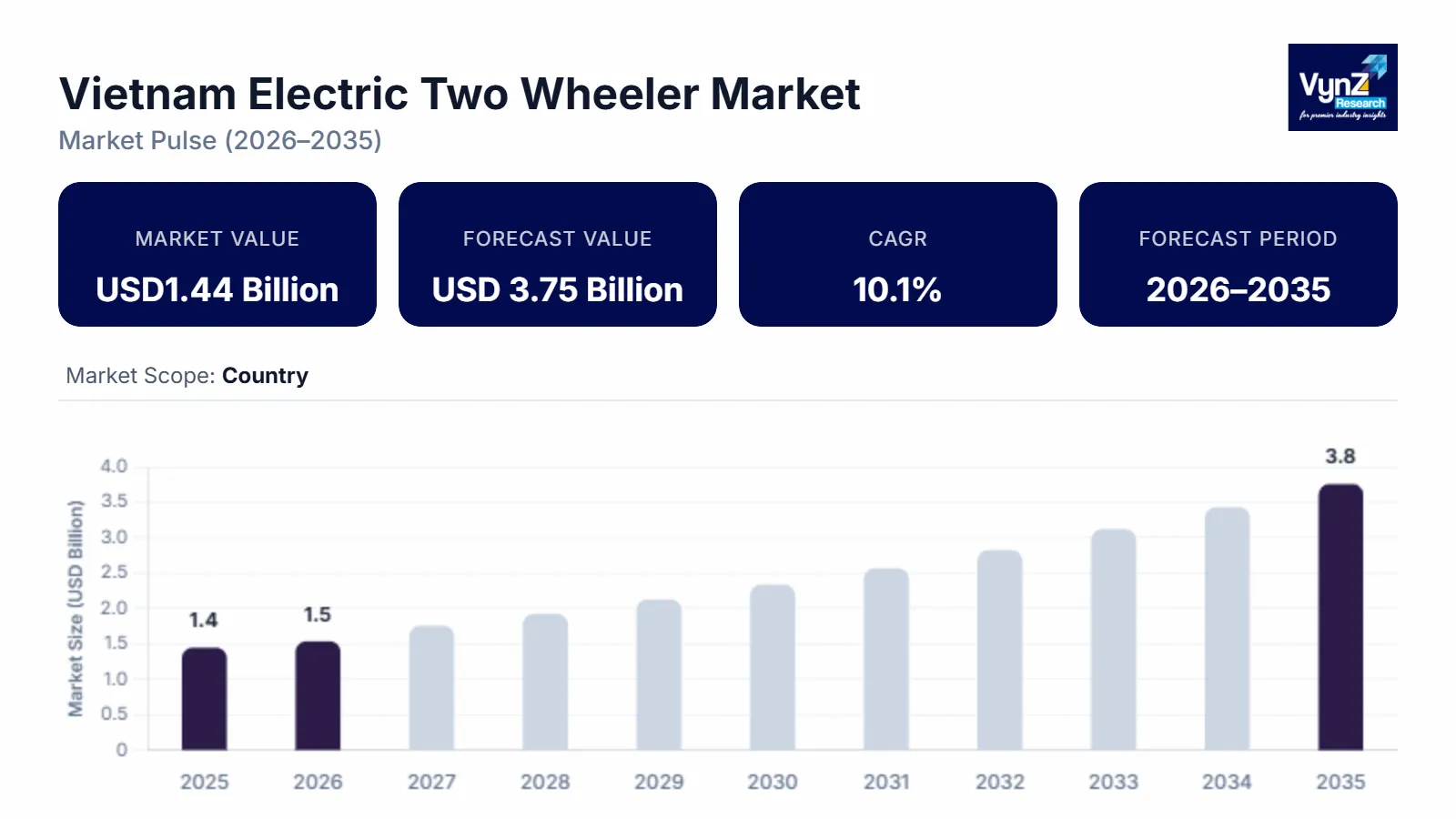
Research Highlights
- Electric scooters held 48.6% share in 2025 due to growing urban commuting demand.
- Electric motorcycles are projected at 11.4% during 2026 to 2035 driven by commercial adoption.
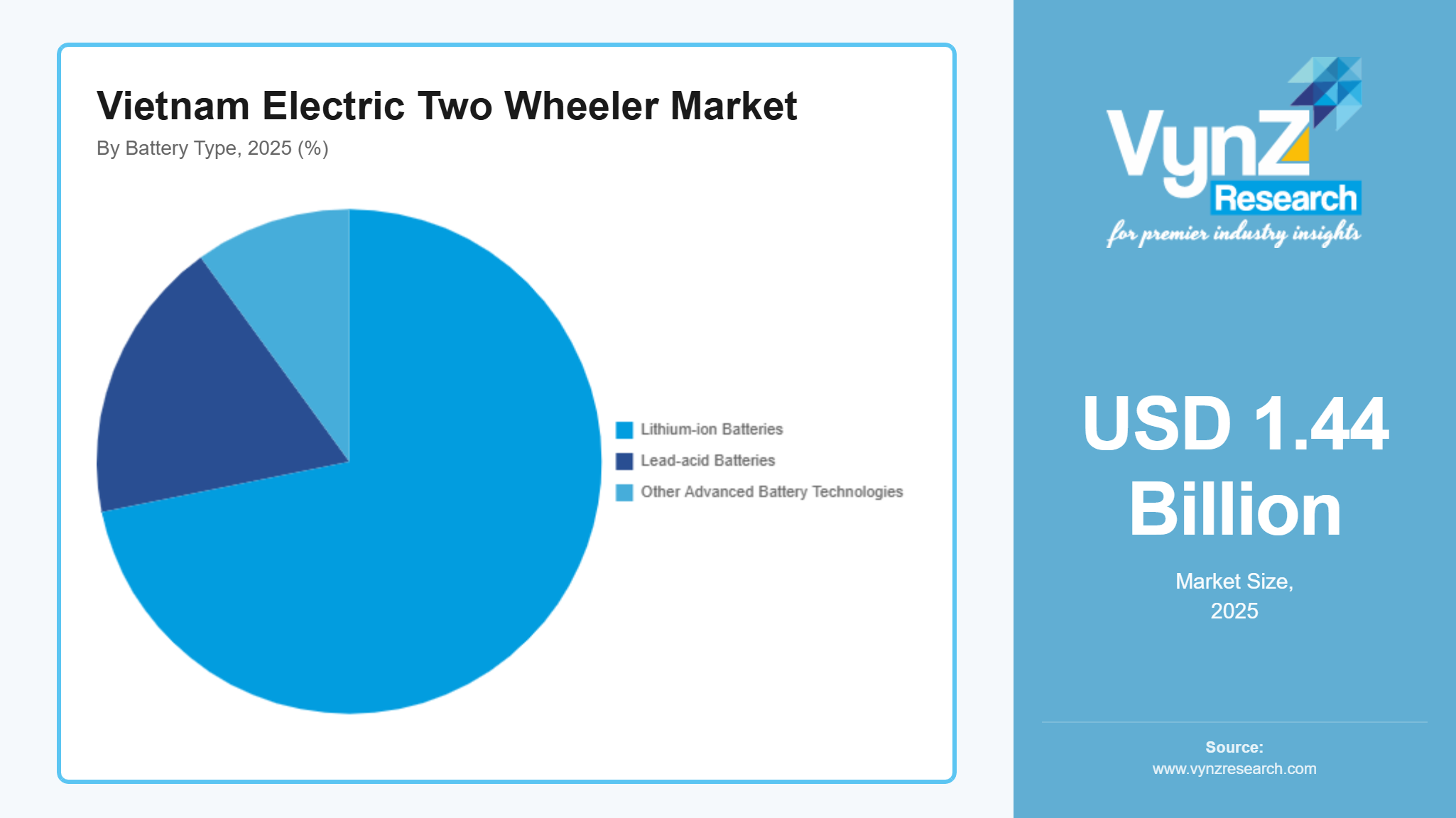
- Lithium-ion batteries accounted for 71.8% share in 2025 supported by higher efficiency.
- Other advanced battery technologies are projected at 13.2% CAGR during 2026 to 2035 due to battery innovation.
- Ho Chi Minh City represented 34.6% market share in 2025, supported by urban mobility demand.
The high penetration of two-wheelers in Vietnam propels the market growth. The rise in traffic congestion in urban areas along with the improvement in charging infrastructure will further supplement the demand for two-wheelers. Moreover, the growing popularity of Vietnam as a manufacturing hub for electric vehicles and supportive government policies by Vietnam Ministry of Transport (MOT), Vietnam Ministry of Industry and Trade (MOIT), and other agencies focusing on developing sustainable transportation systems will surge market growth in the region. The increasing investments by manufacturers, battery suppliers, and mobility companies in the country along with the implementation of supportive policies by the government on the promotion of low-emission transportation fueled by the demand in cities such as Ho Chi Minh City, Hanoi, Da Nang, Hai Phong, and others are estimated to drive the market growth over the forecast period.
Vietnam Electric Two Wheeler Market Dynamics
Market Trends
The market is experiencing the rise of battery technology, smartphone connectivity, and alternative transportation options. One of the main trends in the region is the growing popularity of electric scooters and electric motorcycles with lithium batteries, longer driving ranges, quick charging abilities, and smart tech features. Manufacturers are also developing lighter-weight models with enhanced battery technology, digital displays, and smartphone apps. There is also a rising trend of battery swapping and shared mobility, especially in Ho Chi Minh City, Hanoi, and Da Nang.
Growth Drivers
The growth is propelled by Vietnam’s large two-wheeler market, rising oil prices, and need for more affordable transportation make it an attractive market for electric motorcycle and scooter manufacturers. Motorcycles and scooters represent a significant portion of total transportation in Vietnam and provide a convenient mode of transportation for personal use or for getting around congested city centers. The Prime Minister and government are promoting reduced emissions and more sustainable modes of transportation, including natural gas and electric vehicles. Vietnam’s Ministry of Industry and Trade (MOIT) and Ministry of Transport (MOT) are promoting energy efficiency and alternative fuel transportation. At the same time, delivery companies are also adopting electric vehicles, including in Ho Chi Minh City and other major cities and municipalities in Vietnam.
Market Restraints / Challenges
Challenges for the market include the lack of charging infrastructure, higher costs compared to traditional motorcycles, and consumer hesitation about battery replacement costs. In Vietnam, most people purchase their motorcycles and scooters and only replace them every few years, so battery costs and power capacity are important considerations for many consumers. The market must also overcome the challenge of different charging station standards, as well as the lack of convenient battery recycling options. Traditional petrol scooter and motorcycle manufacturers are also promoting their products, while electric vehicle manufacturers must invest in R&D, battery technology, production, and cost reduction in order to be able to compete with established motorcycle manufacturers.
Market Opportunities
Battery storage and swapping represent a significant opportunity for the market. Delivery companies, including in Ho Chi Minh City, are promoting the use of electric motorcycles and scooters, and there is also growing interest from ride-hailing companies in the region. There is potential to develop new smartphone-connected scooter models that promote shared mobility, smart transportation, and affordable, accessible personal transportation for middle-class consumers. Another opportunity for electric vehicle manufacturers in Vietnam is to promote local production of electric scooters and motorcycles while also promoting battery swapping options.
Vietnam Electric Two Wheeler Market Report Coverage
|
Report Metric
|
Details
|
|
Historical Period
|
2020 - 2024
|
|
Base Year Considered
|
2025
|
|
Forecast Period
|
2026 - 2035
|
|
Market Size in 2025
|
U.S.D. 1.44 Billion
|
|
Revenue Forecast in 2035
|
U.S.D. 3.75 Billion
|
|
Growth Rate
|
10.1%
|
|
Segments Covered in the Report
|
Vehicle Type, Battery Type, Application, End User
|
|
Report Scope
|
Market Trends, Drivers, and Restraints; Revenue Estimation and Forecast; Segmentation Analysis; Companies’ Strategic Developments; Market Share Analysis of Key Players; Company Profiling
|
|
Regions Covered in the Report
|
Ho Chi Minh City, Hanoi, Da Nang, Rest of Vietnam
|
Vietnam Electric Two Wheeler Market Segmentation
By Vehicle Type
The electric scooter segment accounted for the largest market share of about 48.6% in 2025 due to its convenience in urban transportation, lower maintenance cost, ease of use, and high adoption rate among students, office commuters, and regular travelers.
The electric motorcycle segment is expected to register the highest growth rate of around 11.4% during the forecast period, attributed to the improvement in battery technology, demand for longer range, and rising need for commercial use.
By Battery Type
The lithium-ion battery segment contributed for the largest revenue share of about 71.8% in 2025 due to higher energy density, longer cycle life, faster charging capabilities, and growing preference among major electric two-wheeler manufacturers.
The other advanced battery segment is anticipated to register the highest growth rate of around 13.2% during the forecast period, supported by Increasing research into next-generation batteries, demand for improved charging speed, longer operating range, enhanced safety features, and manufacturer efforts to reduce dependency on conventional battery technologies.
By Application
The personal transportation segment held the largest market share of around 62.7% in 2025 because of the rising demand for electric scooters and mopeds among individuals due to easy availability and cost-effectiveness. Additionally, the segment growth is supported by the increasing need for fuel-efficient and environment-friendly vehicles.
The commercial segment is expected to witness the highest growth rate of around 11.8% during the forecast period attributed to the growing need for e-commerce and delivery services in metro cities. The rising demand for fuel-efficient electric vehicles to reduce transportation costs and achieve sustainability goals is projected to propel the segment growth during the forecast period.
By End User
The individual segment represented the largest market share of about 68.5% in 2025 for the high demand for motorcycles, especially in urban areas, and rising fuel prices.
The commercial segment is expected to register the highest growth rate of around 11.6% during the forecast period, supported by the increasing adoption of electric two-wheelers in commercial delivery services, logistics, and shared mobility companies.
Regional Insights
Ho Chi Minh City
Ho Chi Minh city held roughly 34.6% of the Vietnam electric two-wheeler market in 2025 because of high population density, high commuting needs, high delivery service adoption, and sustainable development efforts. The adoption of electric scooter rentals is growing, and students, workers, and delivery riders are choosing electric vehicles over internal combustion engines due to traffic congestion, increasing fuel costs, and emissions. The accessibility to charging stations, smart mobility programs, and e-bike manufacturers’ initiatives are also raising demand in this region, including District 1, Thu Duc City, and Binh Thanh District. The city’s robust e-commerce ecosystem, rising food delivery culture, and clean mobility programs are projected to propel the electric two-wheeler market in Vietnam to even greater heights.
Hanoi
Hanoi accounted for nearly 29.8% of the market in 2025 because of increasing electric scooter adoption, rising urban commuting needs, and emission control efforts in Hoan Kiem, Cau Giay, Ha Dong, and Nam Tu Liem. Demand for cost-effective and efficient transport is rising, and the rising investment in electric vehicle infrastructure is fueling the regional market. Vietnam’s Ministry of Transportation (MOT) and local authorities are encouraging sustainable mobility and zero-emission transportation to promote cleaner cities and reduce smog. In addition, the rising adoption of electric two-wheelers by students, working professionals, and delivery riders will continue to gain momentum over the forecast period.
Da Nang
Da Nang represented about 18.9% of the market in 2025 because of a growing emphasis on smart mobility, rising tourism, and the adoption of electric mobility in Hai Chau, Son Tra, Ngu Hanh Son, and Lien Chieu. The electric scooter and motorcycle market is being spurred by Da Nang’s initiatives to create a smart city and promote clean transportation. Additionally, the presence of electric vehicle rentals, delivery companies, and local initiatives to promote shared mobility is predicted to drive the region’s electric two-wheeler market. The rising usage of electric two-wheelers for private commuting, tourism, and delivery is predicted to bolster the adoption of electric two-wheelers in this region.
Rest of Vietnam
Rest of Vietnam accounted for 16.7% of the market in 2025 comprising major cities such as Hai Phong, Can Tho, Quang Ninh, Binh Duong, Dong Nai, Nha Trang, Hue, and many others. The growing emphasis on electric mobility, growing investment in the creation of smart cities, and the increasing adoption of electric two-wheelers are expected to propel the Rest of Vietnam Electric Two-Wheeler Market growth over the forecast period. As these cities develop, urbanization and improved road infrastructure will generate more demand for electric two-wheelers. The rising awareness of eco-friendly transport and the growing initiatives by the government to promote clean mobility are influencing market growth in this region. Additionally, the growing emphasis on commercial delivery and the availability of electric two-wheelers will fuel the adoption of electric two-wheelers in minor cities and provinces.
Competitive Landscape / Company Insights
The market is moderately consolidated with local manufacturers, international electric vehicle suppliers, and battery manufacturers vying for dominance by focusing on product development, cost optimization, charging infrastructure, and battery technologies. Moreover, numerous companies offer lithium-ion batteries, smart connectivity features, battery-swapping networks, and localized production to gain a competitive advantage over their rivals. Additionally, the electric two-wheeler market growth is propelled by various initiatives involving the Vietnam Ministry of Transport (MOT) and the Vietnam Ministry of Industry and Trade (MOIT).
Mini Profiles
Dat Bike Corporation focuses on locally developed electric motorcycles with emphasis on long-range performance, battery efficiency, and sustainable urban transportation solutions.
Dibao Vietnam provides electric scooters and motorcycles targeting affordable urban mobility, supported by extensive distribution networks across Vietnamese cities.
Honda Vietnam Co., Ltd. leverages its established motorcycle market presence to expand electric mobility solutions through advanced vehicle technologies and consumer-focused products.
Selex Motors develops electric motorcycle platforms and battery-swapping solutions designed for commercial delivery applications and urban logistics operations.
VinFast Auto Ltd. is a leading Vietnamese electric vehicle manufacturer focusing on electric scooters, battery technologies, and nationwide charging infrastructure development.
Key Players
- Dat Bike Corporation
- Dibao Vietnam
- Gotion High-Tech Co., Ltd.
- Honda Vietnam Co., Ltd.
- NIU Technologies
- Selex Motors
- TAILG Electric Vehicle Group
- VinFast Auto Ltd.
- Yamaha Motor Vietnam Co., Ltd.
- Yadea Group Holdings Ltd.
Recent Developments
VinFast Auto Ltd. expanded its electric two-wheeler ecosystem through additional charging and battery service infrastructure across major Vietnamese cities. The initiative supported wider consumer adoption.
Selex Motors increased deployment of its battery-swapping network for commercial electric motorcycles. The expansion improved fleet efficiency for delivery operators.
Dat Bike Corporation introduced enhanced electric motorcycle models featuring improved battery range and performance capabilities. The launch strengthened its position in premium urban electric mobility.
NIU Technologies expanded its smart electric scooter portfolio in Vietnam with upgraded connectivity features and improved energy management systems.
Yadea Group Holdings Ltd. increased its electric scooter distribution presence in Vietnam through expanded retail partnerships and product availability.